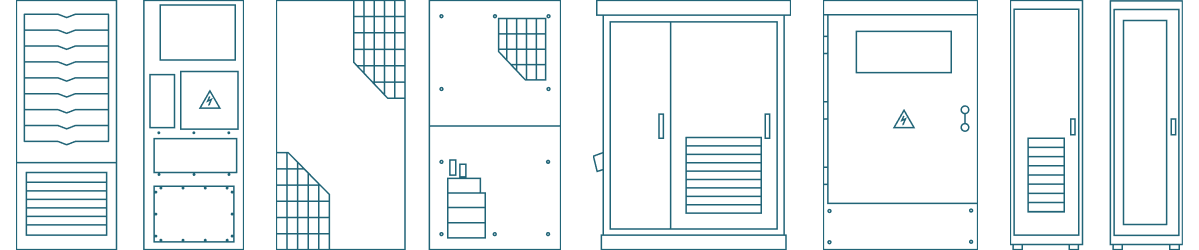
IT infrastructure
Glossary defaultDefinition
IT infrastructure refers to the technology systems and resources required to operate digital applications, services, communications, and data processing.
It typically includes servers, storage systems, networking equipment, software platforms, connectivity, and the physical infrastructure required to support this equipment. Depending on the deployment, these supporting systems can include power distribution, cooling, thermal management, equipment racks, cabling, monitoring, and physical protection.
IT infrastructure can be deployed in centralized data centers, edge data centers, micro data centers, offices, industrial facilities, telecom networks, and other distributed environments.
Context
Modern organizations depend on IT infrastructure for communication, data processing, automation, cloud services, operational systems, and increasingly AI-based applications.
The architecture can range from centralized data centers containing thousands of servers to compact computing systems positioned close to users, equipment, or data sources.
As computing becomes more distributed, IT equipment is increasingly deployed outside traditional controlled data center environments. Edge computing, industrial applications, telecom networks, and other critical infrastructure may place computing and networking equipment in remote, outdoor, or environmentally demanding locations.
These deployments increase the importance of the physical systems supporting the IT equipment. Reliable power, thermal management, environmental protection, and equipment integration can directly influence the availability of digital services.
Technical insight
IT infrastructure consists of multiple interconnected technology layers that work together to provide computing and digital services.
A typical infrastructure environment may include:
- Computing systems
- Data storage
- Networking equipment
- Connectivity
- Software and virtualization platforms
- Power infrastructure
- Cooling systems
- Equipment racks and cabinets
- Monitoring and management systems
- Physical security
The architecture and scale of these systems depend on application requirements, equipment density, availability targets, location, and expected future capacity.
Computing and storage
Servers provide the processing capacity required to run applications and workloads, while storage systems retain the data those applications use.
Modern computing environments can include conventional enterprise servers, high-performance computing equipment, and increasingly powerful hardware designed for AI and machine learning workloads.
Higher computing performance can also increase equipment power density and thermal load, placing additional demands on supporting power and cooling infrastructure.
Networking and connectivity
Networking infrastructure connects servers, storage systems, users, devices, and external networks.
Switches, routers, fiber connections, and other networking equipment allow data to move between systems and locations. Cable management helps organize these connections while maintaining equipment accessibility and avoiding unnecessary restrictions to airflow.
Reliable network connectivity is particularly important for distributed IT infrastructure where computing resources operate across multiple locations.
Power infrastructure
IT equipment requires continuous and stable electrical power.
Supporting power infrastructure may include power distribution equipment, battery backup, redundant power supplies, and other backup power systems designed to maintain operation during electrical disturbances.
For remote or distributed installations, local energy storage or alternative power sources may also be used where grid availability is limited.
Cooling and thermal management
Servers, storage systems, networking equipment, and power electronics generate heat during operation.
Effective thermal management removes this heat and maintains equipment within appropriate operating temperatures. The required cooling technology depends on thermal load, equipment density, ambient conditions, and the physical design of the installation.
Air cooling remains widely used, while liquid cooling is becoming increasingly relevant for high-density computing where conventional airflow-based approaches become less practical.
Physical infrastructure
IT equipment must be mounted, organized, protected, and made accessible for installation and maintenance.
Equipment racks and server cabinets provide standardized structures for installing hardware. In edge, industrial, or outdoor environments, an electrical enclosure or shelter may provide additional environmental and physical protection.
The combination of power, cooling, equipment mounting, cabling, and protection is commonly referred to as data center infrastructure when these systems support a dedicated data center environment.
Monitoring and management
Monitoring systems provide operators with visibility into both IT equipment and its supporting infrastructure.
Depending on the installation, monitoring may include:
- Equipment status
- Network availability
- Power consumption
- Internal temperature
- Cooling performance
- Battery status
- Environmental conditions
- Physical access
Remote monitoring becomes particularly important for distributed infrastructure because equipment may be installed across many geographically separated locations.
Key advantages
- Supports reliable digital services and applications
- Provides scalable computing and storage capacity
- Connects users, devices, and systems
- Supports centralized and distributed computing
- Enables monitoring and management of technology resources
- Provides the foundation for digital operations
Applications
Data centers
Modern data center and IT infrastructure combines computing and networking equipment with the power, cooling, connectivity, and protection required for continuous operation.
Edge computing
Edge computing places IT resources closer to users, devices, and data sources. An edge data center can provide the local infrastructure required to process data without sending every workload to a centralized facility.
Telecom infrastructure
Modern telecom and connectivity infrastructure depends on IT systems for network management, communications services, data processing, and increasingly distributed computing applications.
Industrial automation
IT infrastructure supports industrial automation through control systems, monitoring, analytics, machine vision, automation, and operational technology.
Critical iInfrastructure
Reliable IT systems increasingly support energy and grid infrastructure, transportation, communications, healthcare, defense, and other critical services.
Defense and security
Defense and security applications rely on resilient IT infrastructure for communications, surveillance, data processing, command systems, and other mission-critical digital services.
FAQ
IT infrastructure is the combination of computing, storage, networking, software, connectivity, and supporting physical systems required to operate digital services and applications.
IT infrastructure is the broader technology environment that includes computing, storage, networking, software, and supporting systems. Data center infrastructure refers more specifically to the physical systems, such as power, cooling, racks, connectivity, and protection, that support IT equipment within a data center.
IT equipment requires continuous electrical power and generates heat during operation. Reliable power and effective cooling help maintain appropriate operating conditions and reduce the risk of equipment downtime.
Infrastructure solutions