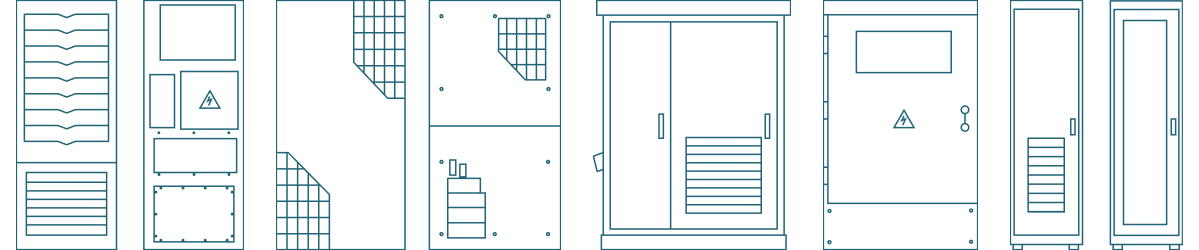
Thermal management
Glossary coolingDefinition
Thermal management is the practice of controlling heat within an outdoor enclosure, server cabinet, or system to maintain stable operating temperatures and ensure reliable performance.
Context
Thermal management is a critical discipline in telecom & connectivity, data center & IT infrastructure, energy & grid infrastructure, and industrial automation. As equipment density and power consumption increase, effective heat control becomes essential for maintaining performance and preventing failure.
In enclosure-based systems, thermal management integrates airflow, heat transfer, cooling capacity, and system design to create a stable internal environment. It combines both passive cooling and active cooling strategies to meet varying operational demands.
Technical insight
Thermal management involves a combination of design strategies and technologies to control heat generation and removal.
Key principles and components:
- Heat generation and thermal load
Equipment generates heat that must be managed based on total thermal load (future) and system requirements. - Heat transfer mechanisms
Effective thermal management relies on conduction, convection, and radiation, all of which are described by the principles of heat transfer. - Airflow and distribution
Controlled airflow and airflow management ensure that heat is removed evenly and hotspots are avoided. - Cooling system integration
Systems may include: - Passive vs active cooling strategies
- Passive cooling for low to moderate heat loads
- Active cooling for higher or controlled cooling requirements
- Hybrid approaches using economizer cooling or free cooling
- Enclosure design considerations
Proper enclosure design supports efficient airflow, insulation, and heat dissipation. - Environmental and operational factors
Ambient temperature, humidity, and installation conditions affect system performance. - System-level integration
Thermal management must protect:- DC power systems
- battery modules
- Network and IT equipment
Effective thermal management ensures stable operation, efficiency, and long-term reliability.
Key advantages
- Maintains stable operating temperatures
- Prevents overheating and equipment failure
- Improves energy efficiency
- Enhances system reliability and uptime
- Supports high-density equipment installations
- Extends equipment lifespan
Applications
- Telecom infrastructure
- Data center and IT systems
- Industrial automation
- Energy and grid infrastructure
- Oil, gas, and mining
- Defense and security
FAQ
It is the process of controlling heat to maintain safe and efficient system operation.
It prevents overheating, improves performance, and ensures long-term reliability.
It includes passive, active, and hybrid cooling strategies combined with effective airflow and enclosure design.
cooling solutions