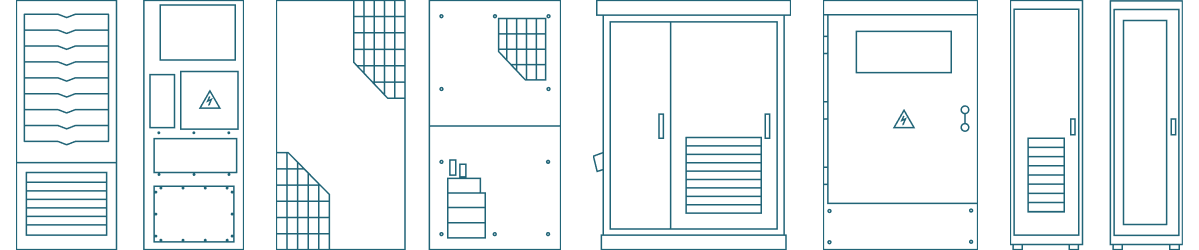
Micro data center
Glossary defaultDefinition
A micro data center is a compact data center designed to provide computing, storage, networking, power, cooling, and physical protection within a self-contained system.
Micro data centers typically contain one or more equipment racks or cabinets and can be deployed close to users, devices, or data sources. This makes them particularly suitable for edge computing applications where low latency, local processing, and distributed infrastructure are required.
Depending on the application, a micro data center may be installed indoors, outdoors, within an electrical enclosure, or inside a dedicated shelter.
Context
Traditional data centers concentrate large amounts of computing infrastructure within centralized facilities. As applications increasingly require data to be processed closer to where it is generated, smaller distributed data center architectures have become more important.
Micro data centers provide a way to deploy computing capacity without constructing a conventional data center facility at every location.
Their compact and integrated design makes them suitable for telecom networks, industrial automation, transportation infrastructure, remote sites, and other critical infrastructure where available space may be limited.
Because micro data centers are frequently installed outside controlled data center environments, cooling, power reliability, environmental protection, and physical security become important parts of the overall system design.
Technical insight
A micro data center combines several infrastructure functions within a compact, integrated system.
A typical configuration may include:
- Servers and computing equipment
- Networking equipment
- Equipment racks
- Power distribution
- Backup power
- Cooling systems
- Monitoring and control
- Cable management
- Physical security
- Protective enclosure or shelter
The exact configuration depends on computing requirements, deployment environment, equipment density, and required level of redundancy.
Computing and networking
The primary function of a micro data center is to provide local computing, storage, and network connectivity.
Equipment is typically installed in standardized racks or cabinets, allowing servers, switches, routers, and other IT equipment to be organized within a compact footprint.
Rack capacity and equipment density influence both space requirements and the amount of heat generated within the installation.
Cooling and thermal management
Servers, networking equipment, and power electronics generate heat continuously during operation.
Effective thermal management is therefore essential for maintaining reliable operating temperatures.
Depending on the thermal load and installation environment, cooling technologies may include:
Airflow management is also important because poor distribution of cooled air can create hotspots even when sufficient cooling capacity is available.
Power and backup
Micro data centers require reliable electrical power to maintain continuous operation.
Power infrastructure may include power distribution equipment, battery backup, Battery Energy Storage Systems (BESS), or other backup power technologies.
The required power autonomy depends on the importance of the connected applications, grid reliability, and expected outage duration.
Environmental protection
Micro data centers deployed indoors within controlled environments may require relatively limited environmental protection.
Outdoor and industrial deployments face additional challenges including:
- Dust
- Moisture
- Temperature extremes
- Corrosion
- Physical impact
- Unauthorized access
An appropriate electrical enclosure or shelter protects the equipment while allowing cooling, power, cabling, and maintenance access to be integrated into the overall system.
Monitoring and remote management
Because micro data centers are often geographically distributed, centralized monitoring can reduce the need for frequent site visits.
Systems may monitor:
- Internal temperature
- Cooling performance
- Power availability
- Battery status
- Equipment alarms
- Access events
Remote monitoring helps operators identify changing conditions and equipment faults before they cause service interruptions.
Key advantages
- Provides computing capacity close to users and data sources
- Supports low-latency applications
- Requires less space than conventional data center infrastructure
- Integrates cooling, power, and protection
- Supports standardized and repeatable deployment
- Suitable for distributed and remote infrastructure
Applications
Micro data centers are commonly used in:
Edge computing
Micro data centers provide the physical infrastructure needed to deploy computing resources closer to users, devices, and data sources.
Telecom infrastructure
Telecom operators use micro data centers to support network functions, fiber infrastructure, mobile networks, and distributed computing applications.
Industrial automation
Industrial sites use local computing infrastructure for automation, monitoring, machine vision, analytics, and real-time processing.
Remote infrastructure
Remote sites can use self-contained micro data centers where conventional data center facilities are unavailable or impractical.
Critical infrastructure
Energy, transportation, communications, and other critical infrastructure can use micro data centers to support local processing and improve service resilience.
FAQ
A micro data center is a compact, self-contained data center that integrates computing, networking, power, cooling, and physical protection within a small footprint.
An edge data center describes data center infrastructure positioned close to users or data sources to support edge computing. A micro data center describes a compact physical data center architecture. Micro data centers are frequently used for edge deployments, but not every edge data center is a micro data center.
Micro data centers can be installed indoors or outdoors at telecom sites, industrial facilities, commercial locations, remote sites, and other distributed infrastructure locations.
Infrastructure solutions