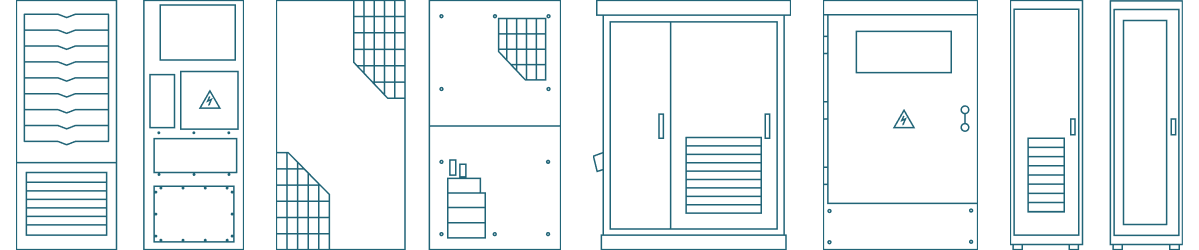
Equipment rack
Glossary protectionDefinition
An equipment rack is a standardized frame used to mount and organize electronic, network, and power equipment using rack unit (U) dimensions.
Context
Equipment racks are widely used across data center & IT infrastructure, telecom & connectivity, industrial automation, and energy & grid infrastructure applications. They provide a structured way to install and organize equipment such as servers, network devices, and DC power systems.
Unlike a server cabinet, which is fully enclosed, an equipment rack is typically an open-frame structure that prioritizes accessibility and airflow. Equipment racks are often installed within outdoor enclosures or integrated into larger systems such as walk-in enclosures.
Technical insight
Equipment racks provide the structural foundation for mounting and organizing equipment in a standardized format.
Key principles and components:
- Rack unit (U) standardization
Equipment is mounted using rack unit (U) spacing, ensuring compatibility across devices and manufacturers. - Open-frame vs enclosed design
- Open-frame racks: maximize accessibility and airflow
- Enclosed systems: use server cabinets for additional protection
- Rack rails and mounting systems
Equipment is secured using rack rails, which support installation, alignment, and maintenance. - Load capacity and structural integrity
Racks must support equipment weight, requiring proper load capacity planning and structural reinforcement. - Airflow and thermal considerations
Open design improves natural airflow, while integration with airflow management ensures efficient cooling performance and supports required cooling capacity. - Cable management systems
Integrated cable management (future) organizes wiring and prevents obstruction of airflow. - Integration with cooling systems
Equipment racks often work alongside: - System-level integration
Racks are used to organize:- DC power systems
- Network and IT equipment
- Control systems
Equipment racks provide flexibility and accessibility while supporting structured system design.
Key advantages
- Standardized equipment mounting and compatibility
- Easy access for installation and maintenance
- Improved airflow compared to enclosed systems
- Flexible configuration and scalability
- Efficient use of vertical space
- Supports modular system design
Applications
- Data center and IT infrastructure
- Telecom equipment installations
- Industrial automation systems
- Energy and grid infrastructure systems
- Oil, gas, and mining installations
- Defense and security systems
FAQ
It is used to mount and organize electronic and network equipment in a structured and standardized way.
An equipment rack is typically open-frame, while a server cabinet is enclosed and provides additional protection and airflow control.
Yes, depending on the installation, they rely on airflow and cooling systems to maintain proper cooling capacity.
protection solutions