Critical infrastructure
Glossary defaultDefinition
Critical infrastructure encompasses the physical facilities, networks, and systems that are essential for the functioning of modern society and the economy. These assets support vital services including electricity generation and distribution, telecommunications, transportation, water treatment, healthcare, emergency services, and industrial operations.
Because interruptions to critical infrastructure can have significant economic, operational, and public safety consequences, these facilities require highly reliable cooling, power, and protection systems.
Context
Modern societies depend on infrastructure that operates continuously under a wide range of environmental and operating conditions. As digitalization, electrification, and renewable energy continue to expand, critical infrastructure is becoming increasingly interconnected and dependent on reliable electrical and communications systems.
Many critical infrastructure facilities operate in remote, outdoor, or harsh environments where equipment must remain operational despite extreme temperatures, humidity, dust, vibration, or power disturbances.
Maintaining reliable operation therefore requires resilient infrastructure that integrates environmental protection, thermal management, backup power, and continuous monitoring.
Technical insight
Critical infrastructure encompasses a wide variety of applications, but they all share common engineering requirements.
Typical infrastructure systems include:
- Electrical power systems
- Telecommunications networks
- Data centers
- Battery Energy Storage Systems (BESS)
- Industrial automation systems
- Transportation infrastructure
- Water and wastewater facilities
Although operational requirements differ between industries, most installations depend on three fundamental infrastructure functions:
Protection
Electrical and electronic equipment must be protected from environmental conditions including dust, moisture, corrosion, vandalism, and unauthorized access.
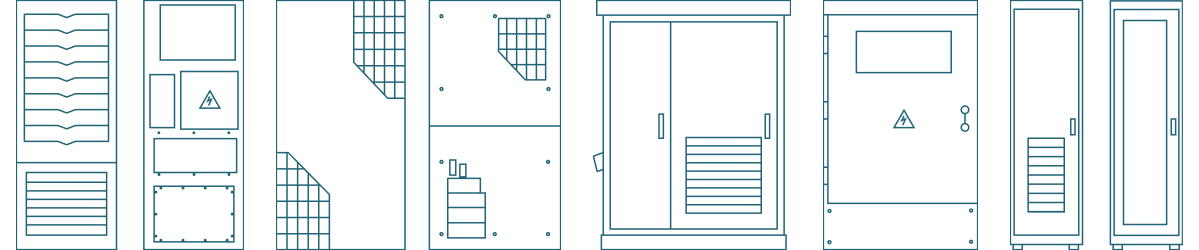
Enclosures, cabinets, and shelter solutions provide the physical protection required to maintain reliable operation.
Thermal management
Electronic equipment generates heat during operation.
Maintaining stable operating temperatures through appropriate cooling technologies helps maximize equipment reliability, improve efficiency, and extend service life.
Depending on the application, thermal management may include:
Reliable power
Continuous operation depends on reliable electrical power.
Many critical infrastructure installations incorporate:
These systems help maintain service continuity during grid disturbances or power outages.
Key advantages
- Supports continuous operation of essential services
- Improves infrastructure resilience
- Reduces operational downtime
- Protects critical equipment
- Supports long-term reliability
- Enables safe and efficient operation
Applications
Critical infrastructure includes:
Energy infrastructure
Power generation, transmission, distribution, renewable energy, and energy storage facilities.
Telecommunications
Mobile networks, fiber infrastructure, communication towers, and edge computing facilities.
Data centers
Enterprise, cloud, colocation, and edge data centers supporting digital services.
Industrial facilities
Manufacturing, process industries, mining, and automation systems supporting essential production.
Public infrastructure
Transportation, healthcare, water treatment, emergency services, and public safety systems.
FAQ
Critical infrastructure consists of the facilities, systems, and networks that provide essential services such as electricity, communications, transportation, healthcare, and water supply.
Reliable critical infrastructure supports economic activity, public safety, and the continuous delivery of essential services.
Critical infrastructure depends on reliable cooling, power, and environmental protection to maintain continuous operation and minimize equipment failures.
Infrastructure solutions