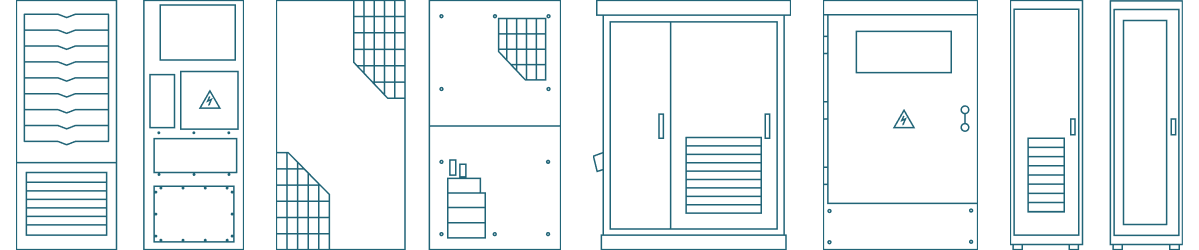
Server cabinet
Glossary protectionDefinition
A server cabinet is an enclosed equipment rack used to house IT, network, and electronic equipment, typically organized using standardized rack unit (U) dimensions.
Context
Server cabinets are widely used in data center & IT infrastructure, telecom & connectivity, and industrial automation environments where structured equipment installation, protection, and cooling are essential. They provide a controlled environment for mounting servers, network devices, and power systems.
In many deployments, server cabinets are integrated within outdoor enclosures or used as part of edge infrastructure. They must support effective airflow management, proper cooling capacity, and secure system integration to ensure reliable operation.
Technical insightor enclosures
Server cabinets are designed to support structured equipment installation, thermal management, and system protection.
Key principles and components:
- Rack-based structure
Equipment is mounted using standardized rack unit (U) spacing, ensuring compatibility across devices and manufacturers. - Enclosed cabinet design
Cabinets include doors, side panels, and frames that provide physical protection and controlled airflow. - Rack rails and mounting systems
Equipment is secured using rack rails, enabling stable installation and easy maintenance. - Airflow and thermal management
- Designed for optimized airflow management
- Supports hot/cold air separation
- Works with cabinet cooling systems, air conditioners, and heat exchangers to maintain required cooling capacity
- Cable management systems
Integrated cable management ensures organized routing and prevents airflow obstruction. - Load and structural capacity
Cabinets must support equipment weight, requiring proper load capacity planning. - Security and access control
Includes locking mechanisms, access control (physical), and tamper-proof features to protect equipment. - Integration with infrastructure systems
Server cabinets typically house:- DC power systems
- Network and IT equipment
- Cooling components
Server cabinets act as the core structure for organized and reliable equipment deployment.
Key advantages
- Standardized and organized equipment installation
- Efficient use of space with rack-based design
- Supports effective cooling and airflow management
- Enhances equipment protection and security
- Simplifies maintenance and upgrades
- Enables scalable infrastructure deployment
Applications
- Data center and IT infrastructure
- Telecom and network installations
- Industrial automation systems
- Energy and grid infrastructure systems
- Oil, gas, and mining installations
- Defense and security systems
FAQ
It is used to house and organize IT and network equipment in a structured and protected environment.
A server cabinet is enclosed, providing protection and airflow control, while an equipment rack is typically an open-frame structure.
Yes, they rely on airflow and cooling systems to maintain proper cooling capacity and prevent overheating.
protection solutions