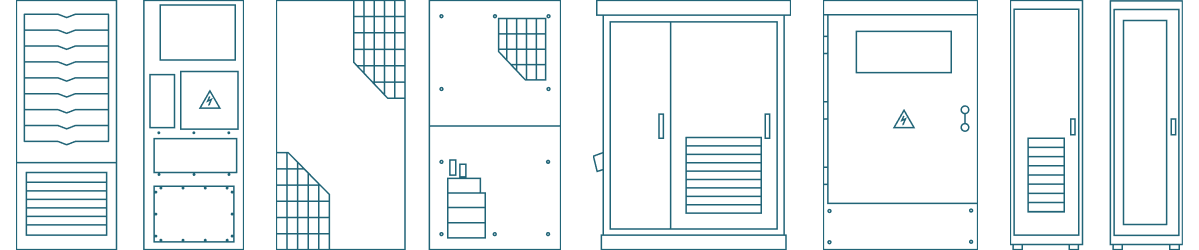
Data center infrastructure
Glossary defaultDefinition
Data center infrastructure refers to the physical systems and supporting equipment required to operate servers, storage, networking equipment, and other IT hardware reliably.
It includes power distribution, backup power, cooling, thermal management, equipment racks, cabling, monitoring, security, and physical protection. Together, these systems create the operating environment required to maintain availability and protect critical computing equipment.
Data center infrastructure is used across centralized facilities, edge data centers, micro data centers, telecom networks, and other distributed computing environments.
Context
Servers and networking equipment cannot operate reliably without supporting infrastructure.
IT equipment requires continuous electrical power, controlled operating temperatures, network connectivity, physical protection, and systems that monitor operating conditions. A failure within any of these supporting systems can affect equipment availability even when the computing hardware itself remains functional.
As computing becomes more distributed and equipment power density increases, infrastructure design becomes particularly important. Edge and micro data centers may need to provide the same fundamental functions as larger facilities within significantly smaller footprints and in less controlled environments.
This places greater emphasis on integrated cooling, power, protection, and remote monitoring.
Technical insight
Data center infrastructure consists of several interconnected systems that must work together to maintain reliable IT operation.
Core infrastructure typically includes:
- Power distribution
- Backup power
- Cooling systems
- Thermal management
- Equipment racks and cabinets
- Cable management
- Network connectivity
- Monitoring and control
- Physical security
- Environmental protection
The required architecture depends on factors such as IT load, equipment density, availability requirements, installation environment, and expected future expansion.
Power infrastructure
Reliable power is fundamental to data center operation.
Power infrastructure distributes electricity to servers, networking equipment, cooling systems, and other critical loads. Depending on the installation, it may include:
- Power distribution equipment
- Battery backup
- Battery Energy Storage Systems (BESS)
- Generators
- Redundant power supplies
Backup power and power system redundancy help maintain operation when the primary electrical supply is interrupted or individual components fail.
Cooling and thermal management
IT equipment converts a significant portion of the electricity it consumes into heat.
Thermal management removes this heat and maintains equipment within acceptable operating temperatures. The appropriate cooling architecture depends on thermal load, equipment density, ambient conditions, and installation design.
Cooling technologies may include:
Airflow management is particularly important in air-cooled installations because inadequate airflow distribution can create hotspots and reduce cooling efficiency.
As rack power density increases, liquid cooling can provide an alternative method of transferring heat away from high-density equipment.
Racks and equipment integration
Equipment racks and server cabinets provide standardized structures for installing servers, switches, storage systems, power equipment, and other hardware.
Rack design affects:
- Equipment capacity
- Airflow
- Cable routing
- Maintenance access
- Physical security
The available rack unit capacity and load capacity must match the equipment being installed.
Connectivity and cable management
Data centers depend on extensive power and network cabling.
Effective cable management helps organize these connections while maintaining access for installation and maintenance. Cable routing should also avoid unnecessary restrictions to airflow around equipment.
For distributed infrastructure, structured cabling can simplify deployment and make configurations easier to replicate across multiple locations.
Monitoring and control
Monitoring systems provide visibility into infrastructure operating conditions.
Commonly monitored parameters include:
- Temperature
- Power availability
- Energy consumption
- Cooling performance
- Battery status
- Equipment alarms
- Access events
Remote monitoring is especially valuable for edge data centers and other distributed installations where frequent physical site visits may be impractical.
Physical and environmental protection
Data center infrastructure must also protect equipment against physical and environmental risks.
Indoor facilities typically use controlled rooms or buildings, while outdoor and distributed deployments may rely on an electrical enclosure or shelter to protect equipment from dust, moisture, temperature extremes, corrosion, physical impact, and unauthorized access.
The required protection depends on the deployment environment and the criticality of the equipment.
Key advantages
- Creates a controlled environment for IT equipment
- Supports continuous power availability
- Maintains safe operating temperatures
- Organizes and protects computing equipment
- Supports scalable equipment deployment
- Improves infrastructure reliability and maintainability
Applications
Edge data centers
Edge data centers require compact infrastructure that integrates computing, power, cooling, connectivity, and protection close to users and data sources.
Micro data centers
Micro data centers combine essential data center infrastructure within a compact, self-contained deployment.
Telecom infrastructure
Telecom networks use data center infrastructure to support network functions, fiber connectivity, communications equipment, and distributed computing.
Industrial facilities
Industrial environments use local data center infrastructure for automation, machine vision, analytics, monitoring, and real-time processing.
Critical infrastructure
Energy, transportation, communications, and other critical infrastructure depend on reliable computing infrastructure to support essential digital systems.
FAQ
Data center infrastructure includes the physical systems required to operate IT equipment reliably, including power, cooling, racks, connectivity, monitoring, and physical protection.
Core components include power distribution, backup power, cooling and thermal management, equipment racks, cabling, connectivity, monitoring, security, and environmental protection.
Both require the same fundamental infrastructure functions, but edge data centers typically integrate them within smaller distributed installations that may operate outside conventional controlled data center environments.
Infrastructure solutions