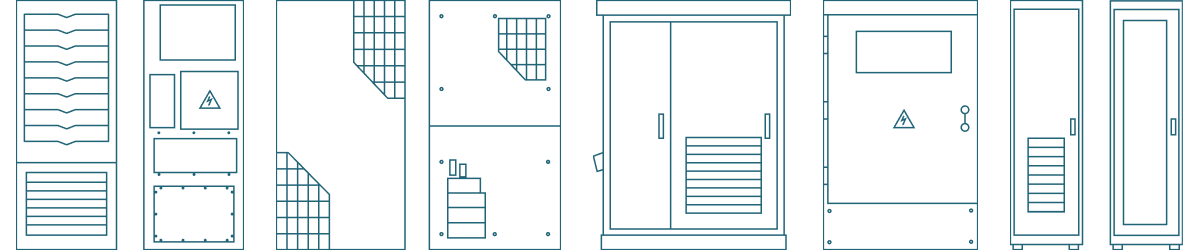
Heat exchangers designed for energy-efficient cooling of electrical enclosures, telecom cabinets, and industrial equipment using air-to-air or thermosiphon technology.
Heat exchangers

Low-GWP options
Thermal performance
Energy-efficient cooling
Enclosure heat exchanger series


Why choose Vikinor heat exchangers
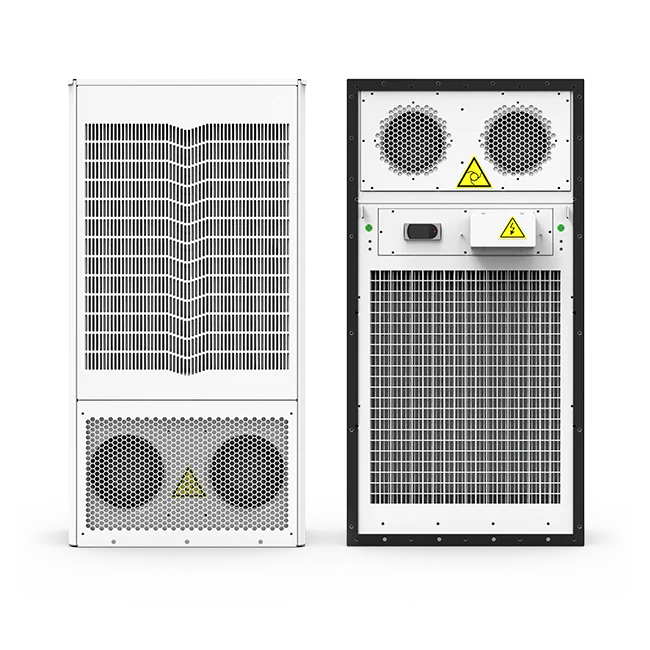
Vikinor heat exchangers are designed for reliable and energy-efficient cooling of electrical enclosures in telecom, industrial, and infrastructure environments. They provide effective thermal management while maintaining enclosure protection and minimizing energy consumption.
Energy-efficient cooling
- Passive or low-power cooling operation
- Significantly lower energy consumption than air conditioners
- Ideal for energy-sensitive installations
Closed-loop protection design
- Separates internal and external airflow
- Maintains enclosure protection class
- Prevents ingress of dust, moisture, and contaminants
Flexible cooling configurations
- Available as natural convection or fan-assisted models
- Suitable for a wide range of enclosure sizes
- Adaptable to different installation environments
Wide capacity range
- Cooling capacity from 30 W/K to 500 W/K
- Airflow from 150 to 1500 CFM
- Suitable for both compact cabinets and large shelters


Choosing the right heat exchanger
Heat exchangers use different airflow and heat transfer principles depending on the installation requirements, enclosure design, and environmental conditions.

Cross-flow heat exchangers
Designed for balanced airflow and reliable performance across a wide range of enclosure applications.
Counter-flow heat exchangers
Optimized for higher thermal efficiency where maximum heat transfer is required.
Thermosiphon heat exchangers
Passive cooling systems using natural convection, ideal for low-maintenance and energy-efficient installations.
Heat exchangers – technical overview
Heat exchangers are passive or low-energy cooling systems that transfer heat from inside an enclosure to the external environment without mixing internal and external airflows. They are widely used in applications where maintaining enclosure protection and minimizing energy consumption are critical.
Enclosure heat exchangers remove heat from electrical cabinets and enclosures through air-to-air or thermosiphon heat transfer. Unlike compressor-based air conditioners, they operate without compressors, although thermosiphon systems use a sealed refrigerant circuit.
Unlike free cooling systems, heat exchangers use a closed-loop design that separates internal and external airflows, maintaining enclosure protection and preventing contamination.
This makes them a reliable solution for telecom cabinets, industrial control systems, and outdoor enclosures where sealed protection is required.
Without compressor-based cooling, heat exchangers typically consume significantly less energy than air conditioners. This makes them ideal for remote telecom cabinets and energy-critical sites, helping reduce operational costs over the equipment lifecycle.
Heat exchangers transfer heat between two separate airflow paths:
- Internal air circulates within the enclosure
- External air removes heat through a heat exchange surface
Because the airflows remain separated, the enclosure maintains its protection rating.
Heat exchangers and air conditioners serve different cooling requirements.
- Heat exchangers are ideal for energy-efficient cooling when ambient temperatures are lower than internal temperatures
- Air conditioners provide active cooling when heat loads are high or ambient temperatures exceed desired enclosure conditions
Choosing the correct system depends on environmental conditions and cooling demand.
Thermosiphon heat exchangers use a sealed refrigerant circuit to transfer heat without a compressor. Selected configurations are available with low-GWP R513a or ultra-low-GWP R1234yf, helping reduce the potential environmental impact of refrigerant emissions.
Refrigerant selection depends on system design, operating conditions, and applicable environmental requirements.
Related cooling solutions