Insights 4 min. read — Jun 25, 2026
Cooling battery energy storage systems: Why thermal control matters
Effective thermal control is essential for Battery Energy Storage Systems (BESS), helping maintain battery performance, extend service life, and ensure reliable operation in demanding environments.
Battery Energy Storage Systems (BESS) play a critical role in modern energy infrastructure, supporting renewable energy integration, grid stability, and backup power for critical applications. As these systems continue to grow in capacity and deployment, managing the heat generated by battery cells has become one of the most important aspects of system design.
Unlike many other electrical systems, batteries are highly sensitive to temperature. Charging, discharging, and high ambient temperatures all generate heat that must be effectively managed to maintain safe operating conditions. Even relatively small temperature differences between battery modules can affect overall system performance and long-term reliability.
For this reason, thermal management is a fundamental part of every modern BESS installation. Selecting the appropriate cooling strategy helps protect the battery investment while supporting efficiency, availability, and operational safety throughout the system’s lifecycle.
Why battery energy storage systems generate heat
Every battery produces heat during normal operation.
Heat is generated through internal electrical resistance as batteries charge and discharge. The amount of heat produced depends on several factors, including:
- Charge and discharge rates
- Battery chemistry
- Ambient temperature
- State of charge
- System power output
As battery capacity increases, so does the total thermal load that must be removed from the enclosure.
External environmental conditions also influence battery temperatures. Outdoor BESS installations may experience extreme heat, cold, solar radiation, or rapid temperature changes, all of which affect cooling requirements.
What happens without effective thermal control
Thermal management is not simply about preventing batteries from overheating.
Maintaining stable operating temperatures helps optimize overall system performance throughout the battery’s service life.
Without effective cooling, operators may experience:
Reduced battery performance
High operating temperatures can reduce charging and discharging efficiency while limiting the available power output.
Accelerated battery degradation
Elevated temperatures increase the rate of battery aging, reducing usable capacity and shortening service life.
Uneven cell temperatures
Temperature differences between battery modules can create performance imbalances across the system, reducing overall efficiency.
Increased operational risk
Poor thermal management places additional stress on batteries and supporting equipment, increasing the likelihood of unexpected maintenance and system downtime.
Engineering perspective: Cooling strategies for BESS
There is no single cooling solution suitable for every Battery Energy Storage System.
The appropriate cooling strategy depends on battery technology, enclosure design, climate conditions, and operational requirements.
Common cooling approaches include:
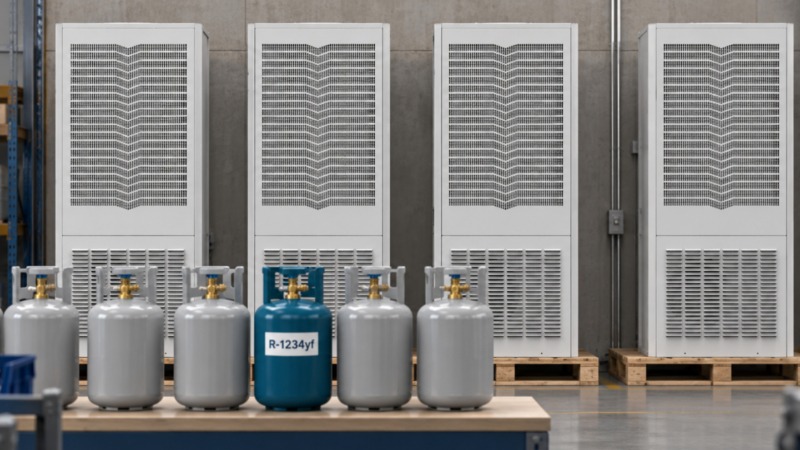
Air conditioning
Air conditioning systems provide precise temperature control and are commonly used where high ambient temperatures or significant thermal loads require active cooling.
Heat exchangers
Air-to-air heat exchangers isolate internal equipment from the external environment while removing heat when ambient conditions allow.
Free cooling
Free cooling systems use cool outside air to reduce mechanical cooling requirements, lowering energy consumption during favorable weather conditions.
Liquid cooling
High-density battery systems increasingly use liquid cooling to remove heat directly from battery modules, providing improved temperature uniformity and support for higher power densities.
Designing reliable thermal management for BESS
Effective cooling depends on more than selecting the appropriate cooling technology.
Engineers must also consider:
- Airflow distribution
- Enclosure design
- Thermal load
- Ambient operating conditions
- Redundancy requirements
- Monitoring and control systems
- Future capacity expansion
Designing these elements together helps maintain consistent operating temperatures while improving reliability and reducing lifecycle costs.
Practical guidance: Choosing the right cooling solution
When selecting cooling for a Battery Energy Storage System, organizations should evaluate several factors.
Installation environment
Outdoor installations experience different thermal challenges than indoor facilities and may require different cooling technologies.
Climate conditions
Local ambient temperatures significantly influence cooling system selection and operating efficiency.
Battery technology
Different battery chemistries have different operating temperature ranges and cooling requirements.
System size and power density
Higher-density systems typically require more advanced thermal management solutions than smaller installations.
Long-term operating costs
Cooling systems should be evaluated based on lifecycle performance rather than initial purchase cost alone. Energy efficiency, maintenance requirements, and reliability all contribute to the total cost of ownership.
Key takeaways
- Battery performance depends heavily on effective thermal management.
- Temperature affects efficiency, lifespan, and overall system reliability.
- Cooling requirements increase with battery capacity and power density.
- Air conditioning, heat exchangers, free cooling, and liquid cooling each have appropriate use cases.
- Thermal management should be considered as part of the overall BESS design rather than as an isolated component.
- Selecting the right cooling strategy helps reduce lifecycle costs while supporting reliable operation.
Further reading

Latest news & insights