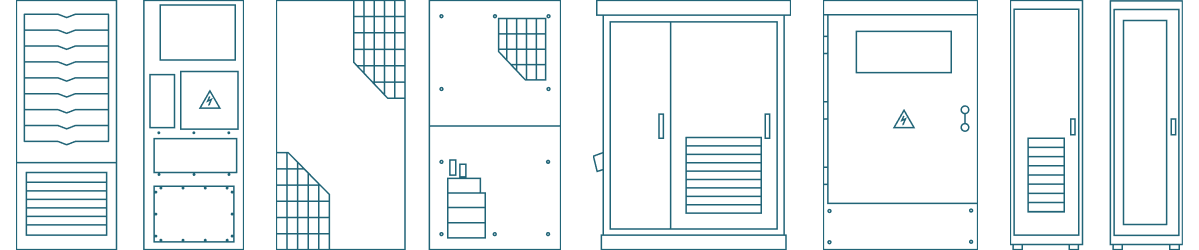
Solar hybrid power system
Glossary poweringDefinition
A solar hybrid power system is an integrated power solution that combines solar energy generation with backup sources—such as batteries and generators—to provide continuous power to an outdoor enclosure or infrastructure system.
Context
Solar hybrid power systems are widely used in telecom & connectivity, energy & grid infrastructure, and industrial automation where reliable power is required in remote or unstable grid environments. These systems reduce dependency on traditional power sources while ensuring uptime.
In many deployments, solar hybrid systems power equipment housed in outdoor enclosures and server cabinets, supporting critical components such as DC power systems and battery modules. They are particularly valuable in off-grid or weak-grid scenarios where consistent energy supply is essential.
Technical insight
Solar hybrid power systems integrate multiple power sources to deliver reliable and efficient energy.
Key principles and components:
- Solar energy generation
Photovoltaic panels convert sunlight into electrical energy, forming the primary power source. - Energy storage systems
Batteries store excess energy for use during low solar production, forming the backbone of energy storage systems (ESS) (future). - Hybrid power control
Intelligent controllers manage energy flow between:- Solar input
- Battery storage
- Backup sources (e.g., generators)
- Backup power integration
Systems may include generators or grid connections to ensure continuous operation. - Power conversion and regulation
Components such as rectifiers and solar charge controllers regulate voltage and ensure stable DC power output. - Load management
Efficient load management ensures optimal use of available energy and prevents system overload. - System efficiency and optimization
Performance depends on system sizing, solar availability, and integration with power distribution board infrastructure. - Integration with infrastructure systems
Solar hybrid systems support:- Telecom equipment
- battery modules
- Cooling systems such as cabinet cooling systems
These systems are designed to balance reliability, efficiency, and sustainability.
Key advantages
- Reduces reliance on grid or fuel-based power
- Ensures continuous operation in remote locations
- Improves energy efficiency and sustainability
- Lowers operating costs over time
- Supports hybrid and scalable system design
- Enhances resilience in unstable grid environments
Applications
- Telecom base stations and remote sites
- Off-grid and hybrid energy systems
- Industrial automation installations
- Energy and grid infrastructure
- Oil, gas, and mining operations
- Defense and security systems
FAQ
It is a power system that combines solar energy with batteries and backup sources to ensure continuous operation.
It is ideal for remote or off-grid locations where reliable power is required.
Solar hybrid systems can integrate multiple power sources, while off-grid systems rely solely on local generation and storage.
powering solutions