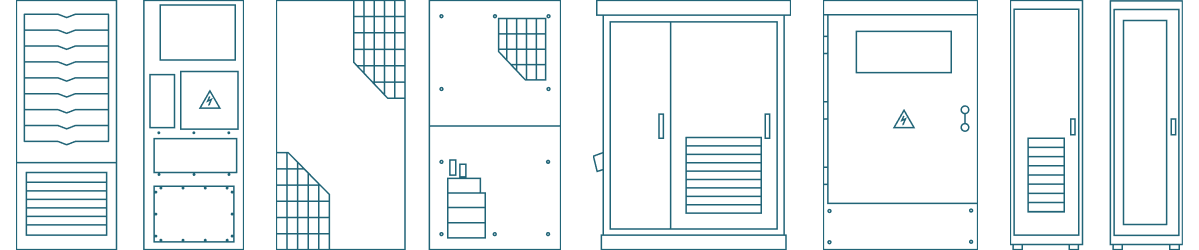
Vandal-resistant
Glossary protectionDefinition
Vandal-resistant refers to the design and construction of an outdoor enclosure or system that resists physical damage, forced entry, and unauthorized tampering.
Context
Vandal-resistant solutions are critical in telecom & connectivity, energy & grid infrastructure, industrial automation, and defense & security applications where equipment is deployed in publicly accessible or remote environments. These environments expose infrastructure to risks such as theft, sabotage, and accidental damage.
To ensure reliability and uptime, enclosures must combine physical protection with environmental resistance. Vikinor systems integrate vandal-resistant features with enclosure design, cooling, and DC power systems to protect critical infrastructure in demanding conditions.
Technical insight
Vandal-resistant design focuses on preventing unauthorized access and minimizing the risk of physical damage through structural and security features.
Key principles and components:
- Reinforced construction
Enclosures use robust materials such as steel or reinforced aluminum to resist impact and forced entry, while also providing protection against corrosion. - Secure locking mechanisms
Advanced locking mechanisms are used to prevent unauthorized access, often combined with restricted access systems. - Tamper-proof design elements
Includes concealed hinges, protected fasteners, and tamper-proof components that make unauthorized access difficult. - Door and panel design
Reinforced doors and multi-point locking systems improve resistance to forced entry. - Mounting and anchoring
Proper installation and anchoring improve stability and prevent removal or displacement, requiring consideration of load capacity. - Integration with enclosure systems
Vandal-resistant enclosures must still support:- cabinet cooling systems
- airflow management
- cooling capacity requirements
- System-level protection
Designed to protect:- DC power systems
- battery modules
- Network and control equipment
Effective vandal-resistant design balances security, accessibility, and system performance.
Key advantages
- Protects equipment from theft and vandalism
- Prevents unauthorized access and tampering
- Enhances system reliability and uptime
- Reduces maintenance and replacement costs
- Supports deployment in public and remote areas
- Improves overall infrastructure security
Applications
- Telecom infrastructure in public areas
- Data center edge installations
- Oil, gas, and mining installations
- Energy and grid infrastructure systems
- Industrial automation systems
- Defense and security installations
FAQ
It refers to equipment designed to resist damage, forced entry, and unauthorized access in exposed environments.
They use reinforced materials, secure locking mechanisms, and tamper-proof features to prevent unauthorized access.
Yes, they are typically designed to meet environmental protection standards such as IP Rating while providing physical security.
protection solutions